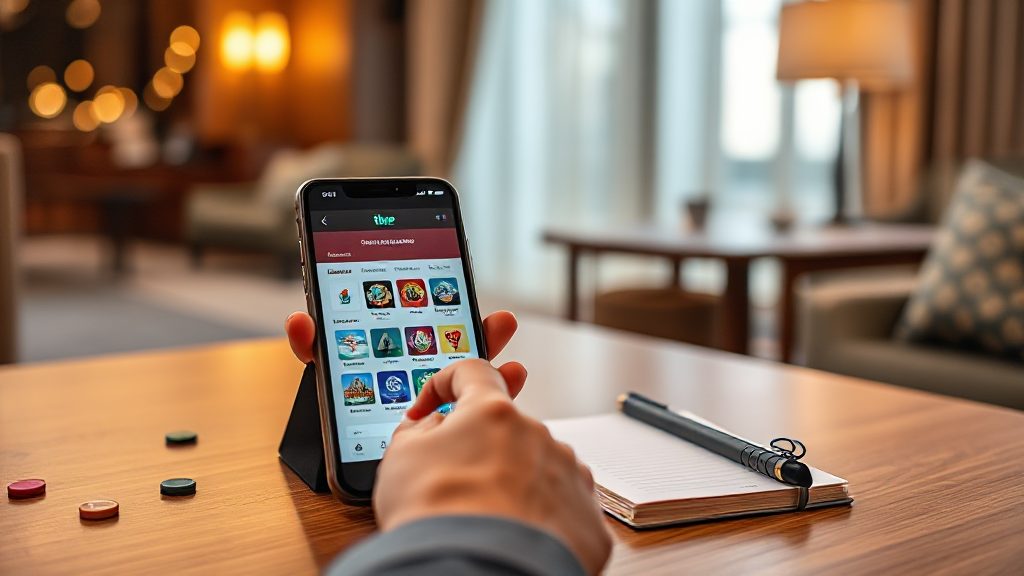
7 Mistakes I Made Before Logging Into tk999
7 Mistakes I Made Before Logging Into tk999
The most common mistake people make with tk999 is treating sign-up like a race. They download the app, tap through registration in under a minute, and then wonder why their first session feels messy. I did exactly that on day one. What follows is a chronological account of what I got wrong, what I changed, and what a calmer second attempt actually looked like.
I am not here to sell you a dream. I spent a week comparing how I approached this platform against how I approached two other betting apps I had used before. The difference was not the platform. It was the preparation. If you want the short version: slow registration prevents most first-day friction.
1. I Started With the App Instead of the Account
My first move was to hunt for the download link before I had read anything about the platform. That felt efficient. It was not. I ended up installing the app, opening it, and then being asked to complete registration inside a screen that had no back button I could find. I had to close the app and start again.
On the second attempt I did it in the right order. I opened the site in a browser, created the account there, and only then downloaded the mobile app. The registration screen was easier to read on a larger display, and the app simply picked up the session when I logged in.
What the right order looks like
- Open the platform in a browser and complete registration.
- Confirm the details you entered, especially your phone number.
- Download the mobile app only after the account exists.
- Log in once on the app to confirm the session carries over.
The lesson is small but real: the account is the foundation, not the app. Treat the download as a second step and the first day gets simpler.
2. I Ignored the Difference Between Browsing and Betting
For the first hour I was browsing. I clicked through categories, looked at the layout, and told myself I was learning the interface. In reality I was just scrolling. Browsing and betting are two different modes, and mixing them is how people make impulsive decisions.
On day two I separated the two. I gave myself a browsing window with no intention of placing anything. I wrote down which sections I actually understood and which ones I did not. Then I closed the app. The next time I opened it, I went straight to the section I had studied.
This sounds obvious, but the interface is designed to keep you moving. Browsing without a goal turns into betting without a plan. If you cannot name the section you are opening, you are probably not ready to open it.
How I split the two modes
- Browsing: no stakes, no account changes, just orientation.
- Betting: one section at a time, decided before the app opens.
- Review: a short note after each session about what worked.
3. I Compared Platforms on the Wrong Criteria
When I started comparing tk999 against the alternatives I had used, I made a classic error. I compared them on how many options were visible on the home screen. That metric tells you almost nothing about whether a platform suits you.
A better comparison looks at how quickly you can get from opening the app to doing the one thing you came for. I timed it. On the platforms I had used before, the average was several taps and one confusing menu. On tk999, once I knew where my section was, it was two taps. That difference matters more than a crowded home screen.
| Comparison point | What I checked first | What actually mattered |
|---|---|---|
| Home screen | Number of visible options | Whether my section was easy to find |
| Registration | Speed of sign-up | Clarity of the form fields |
| Mobile app | Download size | Whether the session carried over |
| Payments | Number of methods | Whether the steps were explained |
The takeaway is not that one platform wins. It is that the right comparison is about your own routine, not the feature list. I only understood that after wasting a day on the wrong criteria.
4. I Skipped the Payment Step Until It Was Urgent
This was my worst mistake. I treated the payment section as something to deal with later. Later arrived at an inconvenient moment, and I had to figure out the steps while I was already in the middle of something else.
On the second pass I read through the payment options before I needed them. I noted which method I would use, what information it required, and roughly how long it took. I did not send money. I just removed the unknown. That single step made the rest of the week feel controlled instead of reactive.
If you take one thing from this account, take this: read the payment steps before you are in a hurry. Urgency is the enemy of careful decisions, and the platform will not slow down for you.
A five-minute pre-check I now do
- Open the payment section and read the options without transacting.
- Write down the method you plan to use.
- Check what details that method asks for.
- Close the app and decide later, calmly.
5. I Let Notifications Set My Schedule
By the third day the app was telling me things. Notifications are useful in theory, but they were deciding when I opened the app instead of me deciding. I noticed I was checking it at times I had not planned to.
I turned most of them off. I kept only the ones tied to account activity, and I set a personal rule: no opening the app outside a window I had chosen. The result was fewer sessions and better ones. Nothing about the platform changed. My relationship with it did.
This is where most people drift. Notifications are a schedule you did not write. If you would not have opened the app at that moment on your own, the notification is doing the deciding for you.
6. I Treated the First Session as a Test of the Platform
My first session was a test of tk999. My second session was a test of me. That shift mattered more than any feature comparison. On day one I was looking for reasons the platform was good or bad. On day two I was looking at whether my own routine held up.
I started keeping a short log. Three lines: what I opened, why I opened it, and whether it matched what I intended. After a week the pattern was clear. The sessions where I had written down my intention beforehand were the ones I felt good about. The sessions where I opened the app first and decided later were the ones I regretted.
The platform is not the variable you control. Your preparation is the only part of the experience you actually own. That sounds like a slogan, but it held up across a full week of use.
7. I Assumed the Learning Curve Was the Platform’s Fault
For the first two days I blamed the interface for my confusion. Then I watched someone else use it and realized the layout was consistent. I had simply never looked at it in order. Once I mapped the main sections on paper, the confusion disappeared.
That was the last mistake worth naming. The learning curve was mine, not the platform’s. A ten-minute mapping exercise on day three replaced two days of frustrated clicking.
What I would tell someone starting today
- Register in a browser, then download the app.
- Separate browsing sessions from betting sessions.
- Compare platforms on your own routine, not on visible options.
- Read the payment steps before you need them.
- Turn off notifications that set your schedule for you.
- Write your intention down before you open the app.
- Map the layout on paper if it feels confusing.
None of these are secrets. They are the things I skipped because I wanted to get started. The week taught me that the platform rewards a prepared user and punishes a rushed one, and the difference between the two is about ten minutes of thinking before you tap anything.